SKIN CANCER IN MEN
Skin cancer
Skin cancer is the most common type of cancer. The main types of skin cancer are squamous cell carcinoma, basal cell carcinoma, and melanoma. Melanoma is much less common than the other types but much more likely to invade nearby tissue and spread to other parts of the body. Most deaths from skin cancer are caused by melanoma. Explore the links on this page to learn more about skin cancer prevention, screening, treatment, statistics, research, clinical trials, and more.
What you can do
Be safe in the sun.
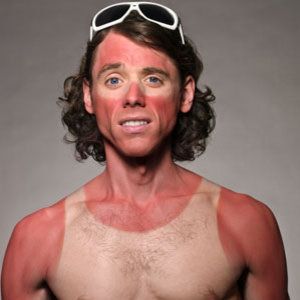
Practicing sun safety is one of the most important things you can do to lower your risk of skin cancer.
- Limit time in the sun, especially between 10 a.m. and 4 p.m. when the sun’s rays are strongest.
- Use a broad-spectrum sunscreen with a sun protection factor (SPF) of at least 30 on exposed skin all year round. Reapply sunscreen every 2 hours or after swimming or sweating (even if it’s waterproof).
- Wear protective clothing, sunglasses that have UV protection, and a hat.
- Avoid tanning beds and sun lamps.
Check your skin.
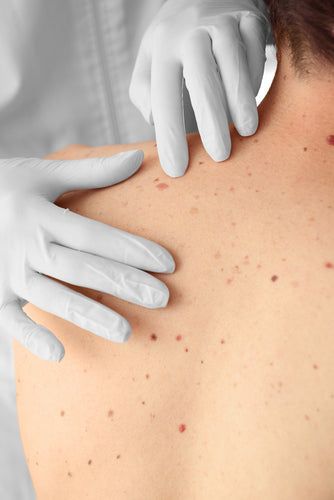
The best way to catch skin cancer early is to check your skin for changes. Many health care providers suggest checking your skin about once a month.
- Know what all moles and spots on your skin look like, and report any changes to a health care provider right away.
- Ask about having a skin exam done during your regular health checkups.
Common Types of Skin Cancer in Men:
Basal Cell Carcinoma (BCC): Slow-growing, often appears as a waxy bump or sore.
Squamous Cell Carcinoma (SCC): Can look like a rough patch, wart, or sore that doesn’t heal.
Melanoma: The most serious type, often appearing as a new mole or changes in an existing mole.
Warning Signs to Watch:
A sore that doesn’t heal.
New growths or unusual moles.
Changes in size, shape, or color of existing moles.
Red, scaly patches on the skin.
(Remember the “ABCDE” rule for moles: Asymmetry, Border, Color, Diameter, Evolving).
Prevention Tips for Men:
Apply broad-spectrum sunscreen (SPF 30+) daily.
Wear protective clothing, hats, and sunglasses outdoors.
Avoid tanning beds and excessive sun exposure.
Do regular skin self-checks and seek medical advice for any suspicious spots.
Basal Cell Carcinoma (BCC): Slow-growing, often appears as a waxy bump or sore.
Squamous Cell Carcinoma (SCC): Can look like a rough patch, wart, or sore that doesn’t heal.
Melanoma: The most serious type, often appearing as a new mole or changes in an existing mole.
Warning Signs to Watch:
A sore that doesn’t heal.
New growths or unusual moles.
Changes in size, shape, or color of existing moles.
Red, scaly patches on the skin.
(Remember the “ABCDE” rule for moles: Asymmetry, Border, Color, Diameter, Evolving).
Prevention Tips for Men:
Apply broad-spectrum sunscreen (SPF 30+) daily.
Wear protective clothing, hats, and sunglasses outdoors.
Avoid tanning beds and excessive sun exposure.
Do regular skin self-checks and seek medical advice for any suspicious spots.